

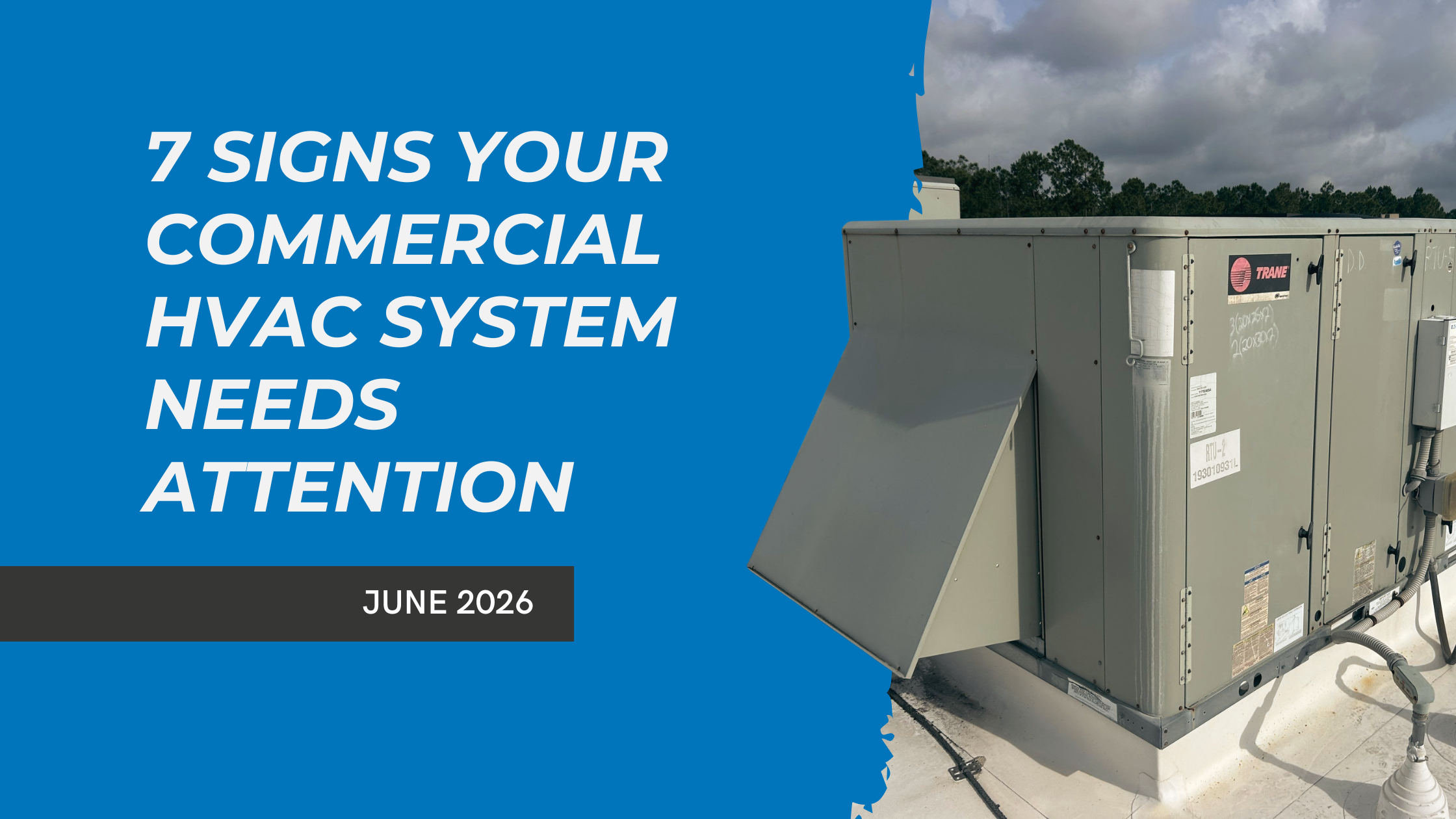
7 Signs Your Commercial HVAC System Needs Attention
Most commercial HVAC failures don’t happen out of nowhere. The system gives you signals first. The problem is that those signals are easy to miss, easy to dismiss, and easy to confuse with each other.
By the time a tenant complains or a unit stops working, the issue has usually been building for weeks. A diagnostic mindset closes that gap. You catch the problem when it’s still cheap to fix instead of when it’s already an emergency.
Here are seven signs worth acting on.
1. Airflow is weaker than it used to be
Airflow is usually the first thing to go and the most overlooked. Vents that used to push strong air now feel weak. Rooms take longer to reach setpoint. Tenants describe the air as stuffy even when the temperature reads correct.
The cause can be as simple as a clogged filter or as serious as a failing blower motor. You don’t need to know which. You need to know the system is telling you something before tenants do.
2. Hot and cold spots in spaces that used to be even
A space that was comfortable last season and uneven this season is signaling a problem. The most common causes are duct issues, balancing problems, or a unit struggling to keep up with load. None of them resolve on their own, and all of them get worse in Florida heat.
3. The system runs constantly without holding setpoint
This is one of the clearest signs a system is under strain. If the unit runs continuously but the space still drifts off setpoint, the system is working harder for less output. That translates directly to energy waste and accelerated wear on every component involved.
A related pattern: the space cools fine in the morning but loses ground by mid-afternoon. That usually means the system is undersized for current load or a component is failing under heat stress.
4. Temperatures swing more than they used to
Stable rooms that now fluctuate by several degrees usually point to one of three things:
- A sensor or thermostat issue
- A refrigerant problem
- A control malfunction
The fix depends on the cause, but the signal is the same. Setpoint drift is a real warning, not a quirk.
5. New or unusual sounds
A commercial HVAC unit has a baseline sound profile when it’s healthy. When that profile changes, something has changed mechanically.
Worth paying attention to:
- Grinding or scraping, which typically points to motor bearings or fan blade contact
- Hissing, which can indicate a refrigerant leak
- Banging or clanking on startup, often a sign of loose components or compressor strain
- A persistent high-pitched whine, usually electrical or belt-related
You don’t need to diagnose the part. You need to flag the sound.
6. Moisture where there shouldn’t be any
Condensation and standing water around a commercial HVAC unit is not normal. In Florida, where humidity already pushes systems harder, moisture problems escalate quickly.
Watch the area around air handlers, drain pans, and ductwork. Pooled water, ceiling stains under indoor units, or visible drip lines from rooftop equipment all signal something is off. The most common causes are clogged condensate lines, failing drain pans, or coil issues, but each can lead to mold, electrical damage, or structural problems if ignored.
The EPA’s guidance on mold prevention in commercial buildings is direct on this point: moisture control is the foundation of mold control, and keeping HVAC drip pans clean and flowing is one of the specific maintenance steps that prevents bigger problems downstream. Treat moisture signals as urgent.
7. Electrical warning signs
Electrical issues are the ones property managers tend to wait on and the ones that most often cause sudden failures.
If breakers trip when the unit cycles on, that’s not a coincidence. If you smell anything burning near a unit, even faintly, shut it down and call for service. If the unit short-cycles, starting and stopping in rapid intervals, the system is either misreading conditions or overheating internally.
None of these get better on their own.
When to call
A useful rule: if you noticed it, it’s worth flagging. Commercial HVAC systems are designed to operate quietly and predictably. Anything that breaks that pattern is information.
Property managers who track these signals catch problems early, which is consistently cheaper than catching them late. A short call to a service partner is a small cost. A failed compressor in August is not.
If you’re not sure whether something qualifies, default to asking. A good HVAC partner would rather check a system that turns out to be fine than respond to a failure that could have been prevented.